



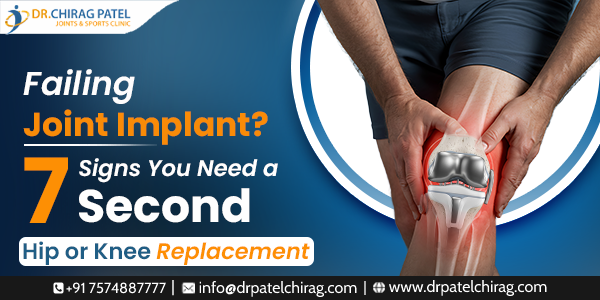
A second hip or knee replacement (also called a revision joint replacement) is considered when the original artificial joint is no longer functioning properly or is causing significant symptoms.
Why does one need a Second Joint Replacement Surgery?
Most hip and knee replacements continue functioning well for many years, and many patients never require revision surgery. But even the most successful ones have rare cases, and hip and knee replacement surgeries are no different. Here are two reasons why one needs a second hip or knee replacement surgery:
Infection – Bacteria can infect the artificial joint, sometimes in the first year and sometimes many years after surgery.
Implant Problems – Over time, the artificial joint implant can loosen due to years of wear and tear or even gradual bone loss.
“Tiny particles from the plastic liner or metal can trigger inflammation that can dissolve the bone around the implant, destabilizing it and causing all sorts of problems. This can happen weeks, months, or even years after surgery”, says Orthopaedic Surgeon in Mumbai Dr Chirag Patel.
Recognizing the signs early can make all the difference:
These infections and implant problems can show up weeks, months, or even years after surgery and slowly deteriorate the joint, causing irreversible damage. “Early detection of these signs can prevent further bone damage, stop the infection from spreading, reduce the risk of falls, and simplify revision surgery too,” says joint replacement surgeon Dr. Chirag Patel.
But how do you know if your Hip Replacement is Failing?
A failing hip replacement usually doesn’t happen overnight. In most cases, the body gives subtle warning signs long before the implant fails completely. Knowing what to look for can help you seek treatment early and prevent further damage. Here are 7 signs you need a second hip or knee replacement:
- Persistent or Worsening Pain: “This can happen weeks, months, or even years after surgery” says hip surgeon Dr Chirag Patel. Pain that returns after years of relief or gradually becomes worse during daily activities is the give-away sign that should never be ignored.
- Joint Instability: A feeling that the hip or knee is loose, giving way, or unable to support your weight properly is another common sign that may indicate that the implant has loosened or is no longer stable.
- Increasing Stiffness: Scar tissue, implant wear, or loosening of the joint can make it difficult to bend or move the joint and make everyday tasks like walking or climbing stairs harder.
- Swelling, Warmth, or Redness: Persistent swelling or warmth around the joint accompanied by redness indicates inflammation or infection. These are common signs that the body is reacting to an underlying problem. So, watch out!
- Difficulty Walking or a New Limp: When you ignore the above signs, the difficulty may progress to a noticeable limp or increasing difficulty walking without support. This may be caused by joint instability or implant failure affecting your normal movement, which is another common sign of failing knee replacement.
- Clicking, Grinding, or Unusual Noises: Another common sign of knee joint problems with a replacement is new clicking, grinding, or catching sensations that weren’t present before. This usually occurs when the implant components have worn out or become loose. This noise, accompanied by pain, swelling or difficulty in walking, is one of the common starting signs that you need a second hip replacement,” says orthopedic surgeon in Mumbai Dr Chirag Patel.
- Fever, Drainage, or Other Signs of Infection: Fever, chills, wound drainage, or pus around the surgical site indicate a serious issue and require immediate medical attention. These symptoms usually indicate a joint infection, which can damage the implant and surrounding bone if left untreated.
“However, it must be remembered that these signs are rare. Because most of the previous-generation joint implants were less sophisticated and had a lifespan of around 20 years, the risk of these complications increases in patients who underwent surgery 10–20 years ago, ” says the top Hip Replacement Surgeon in West Suburbs, Dr. Chirag Patel.
If you are experiencing any of the above symptoms, it could be a cause of a myriad of issues that require immediate attention, as the revision surgery is much more complicated than the original joint replacement surgery. So, patients are requested to stay vigilant about any of the above symptoms and seek care at the earliest if any of the above signs show up.